
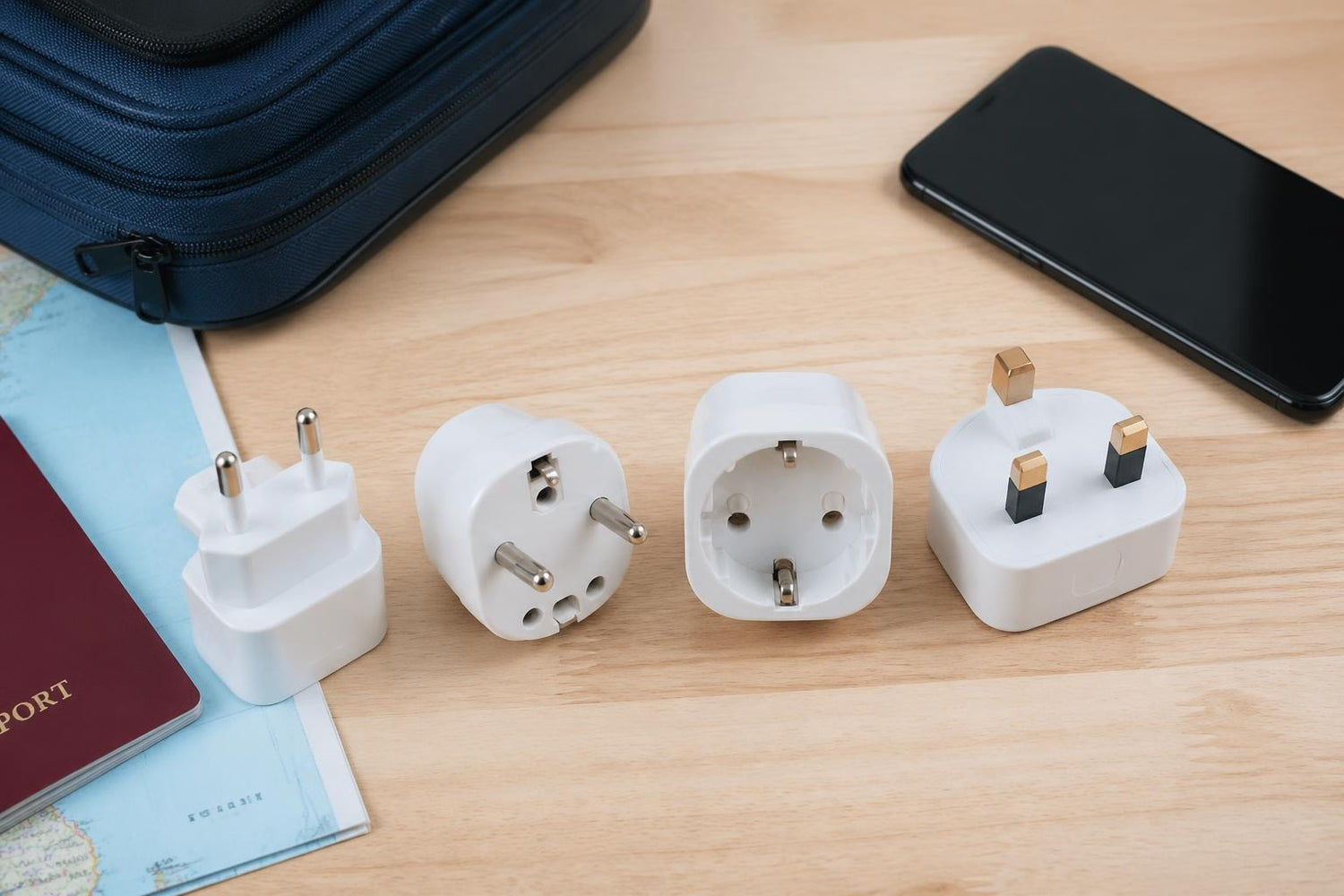
Travelling from Australia to Europe requires careful preparation, and one essential item that often gets overlooked until the last minute is a reliable European travel plug adapter. European countries use different electrical standards than Australia, making it impossible to plug your devices directly into their power outlets without the proper adapter. Understanding the various plug types, voltage requirements, and safety considerations can transform your travel experience from frustrating to seamless, ensuring your devices stay charged throughout your journey.
Understanding European Plug Types and Standards
Europe presents a unique challenge for Australian travellers because the continent doesn't use a single standardised plug type. Instead, multiple configurations exist across different countries, each with distinct specifications and safety features.
The most common plug type you'll encounter is Type C, also known as the Europlug. This two-pin round plug works across most European countries and fits into both Type E and Type F sockets. Type E plugs are predominantly used in France, Belgium, and Poland, featuring two round pins with a hole for the socket's earth pin. Type F plugs, common in Germany, Austria, and the Netherlands, have two round pins with earth clips on the sides.
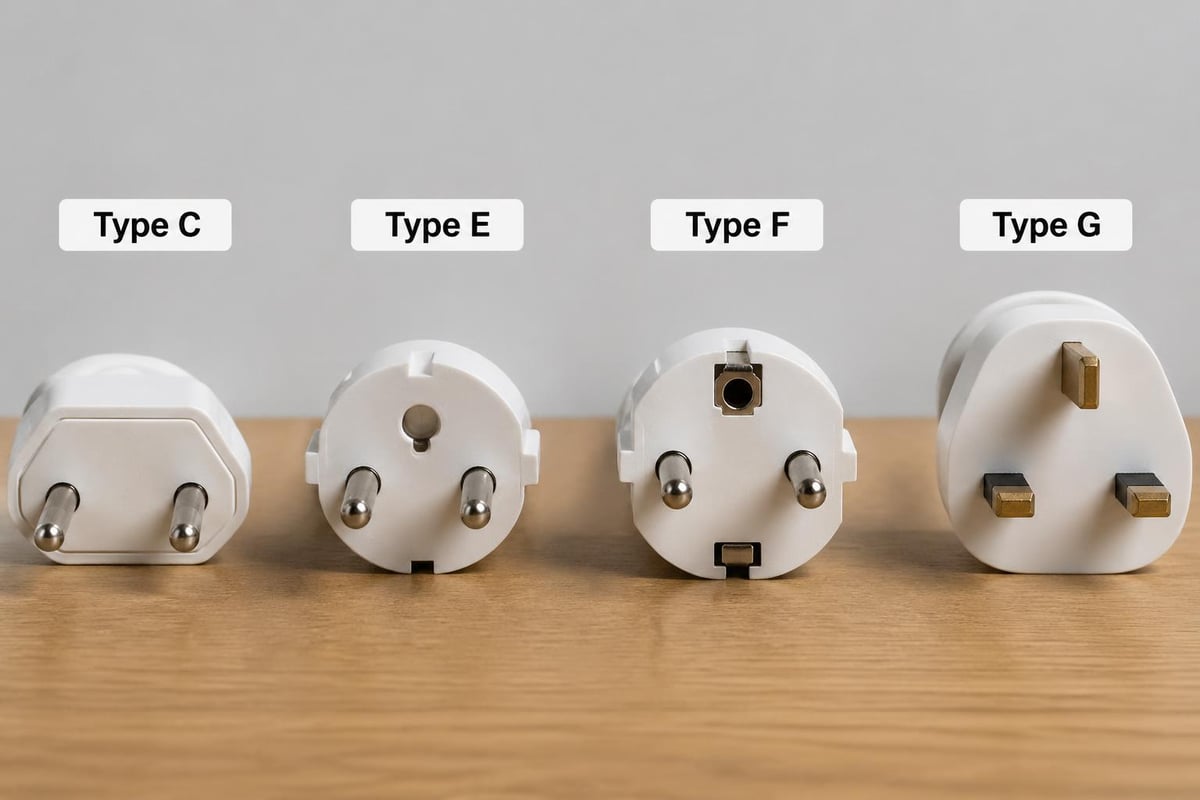
The United Kingdom and Ireland stand apart with Type G plugs, featuring three rectangular pins in a triangular pattern. This distinction means a European travel plug adapter designed for continental Europe won't work in the UK without modification or a separate adapter.
Voltage and Frequency Considerations
Beyond plug shapes, electrical specifications matter significantly. European countries operate on 220-240V at 50Hz, whilst Australia uses 230V at 50Hz. Although the voltage is similar, many devices from other regions operate on 110-120V, creating potential safety hazards.
Your electronic devices fall into two categories: dual-voltage and single-voltage. Dual-voltage devices automatically adjust to different voltages and only require a plug adapter. Single-voltage devices need a voltage converter in addition to your adapter. Check your device's power label or specifications - if it states "INPUT: 100-240V", it's dual-voltage. Modern smartphones, laptops, and camera chargers typically support dual voltage, making them travel-friendly.
According to comprehensive research on European adapter requirements, understanding these technical specifications prevents damaged equipment and potential safety hazards during your travels.
Selecting the Right European Travel Plug Adapter
Choosing an appropriate adapter depends on your specific travel itinerary, the devices you're bringing, and your budget considerations. The market offers various options, from simple plug adapters to sophisticated universal models with additional features.
Single-Country Versus Universal Adapters
Single-country adapters work exclusively for one plug type and region. They're compact, affordable, and reliable if you're visiting only continental Europe or just the UK. These basic adapters simply convert your Australian plug to fit European sockets without affecting voltage.
Universal travel adapters accommodate multiple plug types and work across different continents. These versatile options suit travellers visiting several countries with different electrical standards. Many include USB ports and USB-C charging capabilities, reducing the number of chargers you need to pack.
When selecting between options, consider these factors:
Number of countries on your itinerary
Quantity of devices requiring simultaneous charging
Need for USB charging ports
Weight and space limitations in your luggage
Budget constraints and quality requirements
The step-by-step guide from Reference.com provides detailed comparisons to help you make an informed decision based on your specific circumstances.
Features Worth Considering
Modern European travel plug adapter models incorporate features beyond basic plug conversion. USB ports eliminate the need for separate charging blocks, whilst surge protection safeguards expensive electronics from power fluctuations common in older European buildings.
Feature |
Benefit |
Best For |
|---|---|---|
Multiple USB Ports |
Charge several devices simultaneously |
Families, business travellers |
USB-C Power Delivery |
Fast charging for compatible devices |
Modern smartphones, tablets |
Surge Protection |
Prevents damage from voltage spikes |
Expensive electronics |
Compact Design |
Saves luggage space |
Minimalist travellers |
Built-in Fuses |
Additional safety layer |
High-value equipment |
Smart travellers prioritise quality over price when selecting adapters. Cheap, poorly manufactured adapters can overheat, fail unexpectedly, or damage your devices. Common mistakes outlined by industry experts highlight the importance of investing in certified, reliable equipment that meets safety standards.
Safety Standards and Certifications
European electrical safety regulations are stringent, and using non-compliant adapters can create dangerous situations. Understanding safety certifications helps you identify products that meet necessary standards and protect both you and your devices.
Essential Safety Certifications
Look for adapters displaying CE marking, indicating compliance with European health, safety, and environmental protection standards. Additional certifications like RoHS (Restriction of Hazardous Substances) demonstrate the manufacturer's commitment to using safe materials.
Quality manufacturers test their products rigorously, and their European travel plug adapter models typically include:
Thermal protection that prevents overheating during extended use
Child safety shutters that block access to live contacts
Fire-retardant materials that won't ignite if components fail
Proper grounding for devices requiring earth connections
Product safety regulations in the European Union establish strict requirements that reputable manufacturers follow, ensuring consumer protection across member states.
Common Safety Mistakes to Avoid
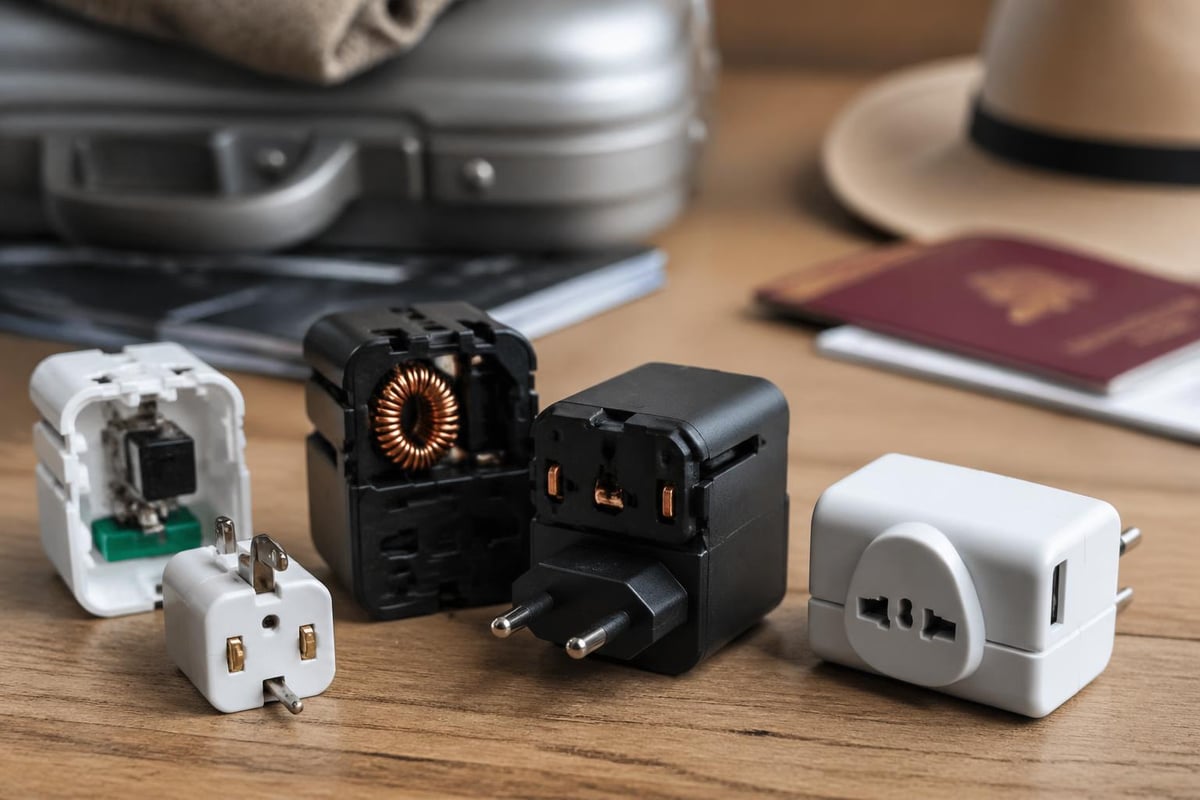
Many travellers unknowingly compromise safety by overloading adapters or using them incorrectly. Never daisy-chain multiple adapters together, as this increases fire risk and can damage equipment. Avoid plugging high-wattage appliances like hair dryers or straighteners into basic adapters not designed for such loads.
Inspect your adapter before each use, checking for:
Loose pins or connections
Burn marks or discolouration
Damaged casing or exposed wiring
Strange odours during use
Excessive heat generation
When exploring travel accessories for your European adventure, prioritise items from reputable suppliers who guarantee product quality and safety compliance.
Packing and Travel Considerations
Integrating your European travel plug adapter into your packing strategy ensures you're prepared without adding unnecessary bulk to your luggage. Thoughtful organisation prevents the frustration of searching through bags for essential charging equipment.
How Many Adapters Do You Need?
The ideal number depends on your travel style and device count. Solo travellers with minimal electronics might manage with a single quality universal adapter. Families or business travellers often benefit from multiple adapters, allowing simultaneous charging in hotel rooms with limited outlets.
Consider bringing:
One primary adapter for everyday use in your accommodation
One backup adapter stored separately in case of loss or failure
A power board (Australian standard) to multiply available outlets through one adapter
This strategy maximises charging capacity whilst minimising the number of European travel plug adapter units required. Smart travellers who invest in organised travel bags find it easier to keep adapters accessible yet secure throughout their journey.
Organising Your Travel Electronics
Effective organisation prevents loss and damage. Designate a specific compartment in your carry-on for all charging equipment, keeping adapters, cables, and power banks together. This system proves invaluable during airport security checks and hotel room setups.
Packing tips for adapters and electronics:
Store adapters in protective cases or packing cubes to prevent damage
Label cables and chargers to identify ownership in shared accommodation
Keep essential chargers in carry-on luggage, not checked bags
Document adapter locations if travelling with multiple bags
Consider cable organisers to prevent tangling
Professional travellers understand that travel gadgets work best when properly organised and easily accessible throughout your journey.
Country-Specific Requirements Across Europe
Whilst many European countries share similar electrical standards, variations exist that impact your adapter needs. Planning according to your specific destinations ensures compatibility and prevents last-minute scrambles.
Continental Europe
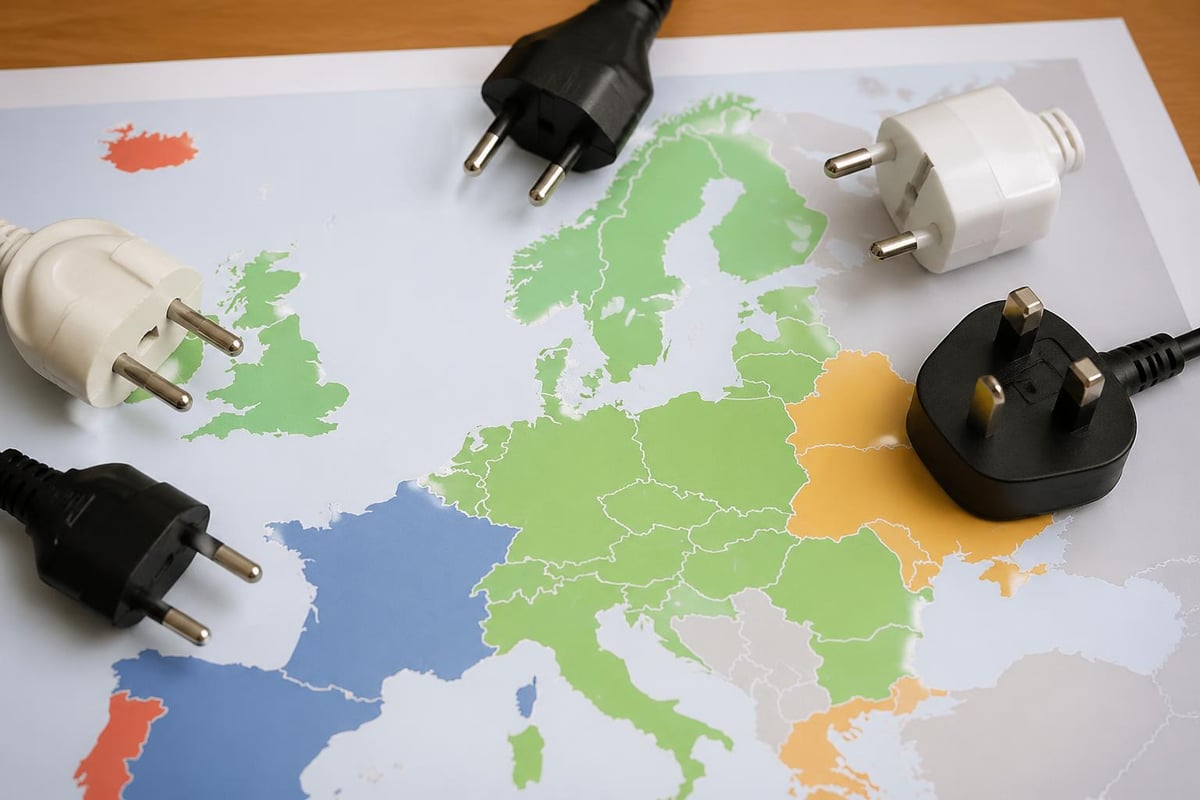
Most continental European countries use Type C, E, or F plugs interchangeably. For most phone chargers and small electronics, a Type C/E/F-compatible adapter will cover much of mainland Europe. For grounded devices, Italy, Switzerland, the UK and Ireland, check the specific plug compatibility.
Country |
Primary Plug Type |
Voltage |
Notes |
|---|---|---|---|
France |
Type E |
230V |
Type C compatible |
Germany |
Type F |
230V |
Type C compatible |
Spain |
Type C, F |
230V |
Both types common |
Italy |
Type C, F, L |
230V |
Type L is common |
Switzerland |
Type J |
230V |
Unique standard, needs specific adapter |
Switzerland stands out with its Type J plugs, which differ from standard European configurations. If visiting Switzerland, ensure your adapter specifically mentions Swiss compatibility.
United Kingdom and Ireland
The UK and Ireland require Type G adapters exclusively. Guidance from Signal + Power details the seven plug types used across Europe, emphasising the importance of matching adapters to your specific destinations.
British plugs incorporate fused protection, and quality adapters for the UK include this safety feature. When purchasing a universal adapter, verify it includes all necessary plug configurations for your entire itinerary.
Adapters for Specific Device Types
Different devices have varying power requirements, and understanding these differences helps you select appropriate adapters and avoid equipment damage. Not all European travel plug adapter models suit every device equally well.
Low-Power Devices
Smartphones, tablets, e-readers, and cameras draw minimal power and work with any quality adapter. These dual-voltage devices automatically adjust to European electrical standards, requiring only plug conversion.
High-Power Appliances
Hair dryers, straighteners, curling irons, and electric shavers demand significant power. Many of these devices are single-voltage and require voltage converters when used in Europe. However, purchasing dual-voltage versions designed for international travel often proves more practical than carrying heavy converters.
High-power device considerations:
Check voltage compatibility before packing
Consider purchasing European-compatible versions
Use adapters rated for high wattage (typically 1000W+)
Never exceed adapter's maximum power rating
Unplug devices when not in use to prevent overheating
Recommendations from DMR Travel emphasise choosing adapters specifically designed for your device types rather than relying on generic models that may underperform.
Medical and Specialised Equipment
CPAP machines, insulin pumps, and other medical devices require special attention. These critical items demand reliable power, and using inappropriate adapters risks health consequences. Always verify compatibility with manufacturers and consider bringing backup power solutions.
Specialised equipment may need:
Dedicated adapters separate from general travel electronics
Voltage converters even if travelling from Australia
Backup batteries for critical overnight use
Documentation for airport security and customs
Purchasing Quality Adapters in Australia
Australian travellers benefit from purchasing their European travel plug adapter before departure, allowing time to test equipment and ensure compatibility. Understanding where and what to buy streamlines preparation.
Retail Options and Considerations
Electronics retailers, travel stores, and online platforms offer various adapter options. Physical stores allow hands-on inspection, whilst online shopping provides broader selection and competitive pricing.
When selecting adapters, prioritise established brands with warranty support. Unknown manufacturers may offer lower prices but often compromise on safety certifications and build quality. The minimal savings aren't worth the risk to expensive electronics or personal safety.
Evaluation criteria for quality adapters:
Manufacturer reputation and customer reviews
Presence of safety certifications (CE, RoHS)
Warranty coverage and return policies
Build quality and material durability
Compatibility with your specific devices
Price Versus Value Considerations
Adapter prices range from budget options under AUD 25 to premium universal models exceeding AUD 100. While expensive doesn't always mean better, extremely cheap adapters often fail prematurely or lack essential safety features.
Mid-range adapters (AUD 40-70) typically offer the best balance of quality, features, and reliability for most travellers. These models include basic safety protections, work reliably, and last through multiple trips. Premium models justify their cost with additional features like multiple USB ports, compact designs, and superior build quality.
Frequent European travellers find that investing in quality adapters pays dividends through reliability and longevity. When preparing travel essentials, allocating appropriate budget for dependable charging solutions prevents expensive problems overseas.
Troubleshooting Common Adapter Issues
Even quality European travel plug adapter units occasionally present challenges. Knowing how to address common problems saves frustration and keeps your devices operational during travels.
Adapter Doesn't Fit Properly
Loose connections indicate incompatible plug types or worn adapter components. European sockets have specific depth and spacing requirements, and some adapters don't fully insert into certain outlet designs. If your adapter feels loose, avoid forcing it - this risks damaging both the adapter and the socket.
Solutions include:
Verifying you're using the correct plug type for that country
Trying different outlets in your accommodation
Checking adapter pins for damage or bending
Requesting assistance from accommodation staff
Using your backup adapter if the primary one fails
Devices Won't Charge or Power On
When devices refuse to charge despite proper connections, several factors might be responsible. First, confirm the outlet works by testing with another device or asking accommodation staff. Next, verify your device supports European voltage - single-voltage devices need converters, not just adapters.
Troubleshooting steps:
Test the outlet with a different device
Inspect adapter for visible damage
Verify device voltage compatibility
Check device charging cable and port
Allow overheated adapters to cool before retrying
Common adapter mistakes identified by experts include voltage mismatches and overloading, both easily prevented with proper planning and quality equipment.
Overheating and Safety Concerns
Adapters becoming excessively hot indicate serious problems requiring immediate attention. Disconnect the adapter, allow it to cool completely, and investigate the cause before resuming use. Overheating typically results from overloading, poor quality components, or electrical faults.
If your adapter shows these warning signs, discontinue use:
Burning smell or visible smoke
Discolouration or melting plastic
Sparking when inserted or removed
Extreme heat that persists after disconnection
Buzzing or crackling sounds during operation
Replace faulty adapters immediately rather than risking fire or equipment damage. Quality adapters from reputable suppliers rarely experience these issues, reinforcing the importance of purchasing certified products.
Alternative Charging Solutions
Beyond traditional adapters, alternative approaches can complement or replace standard European travel plug adapter solutions depending on your circumstances and device ecosystem.
USB Charging Stations
Many modern accommodations provide USB charging ports integrated into power outlets or offered as standalone stations. These eliminate adapter needs for USB-powered devices, though you'll still need adapters for equipment with traditional plugs.
Portable USB charging stations offer another solution. These compact devices accept European plugs and provide multiple USB outputs, centralising your charging setup. Combined with one adapter, they charge several devices simultaneously without requiring multiple adapters.
Power Banks and Battery Solutions
High-capacity power banks reduce reliance on outlet availability and adapter usage. Charge your power bank overnight using your adapter, then use it throughout the day to maintain device power without seeking outlets. This approach particularly benefits travellers spending extensive time sightseeing away from accommodation.
Power bank advantages:
Reduces adapter usage and wear
Provides charging during transportation
Supports devices during long sightseeing days
Serves as backup if adapters fail
Accommodates multiple devices sequentially
When selecting power banks for European travel, verify airline compliance regarding battery capacity. Most airlines permit power banks up to 100Wh (approximately 27,000mAh) in carry-on luggage.
Rental and Borrowing Options
Some accommodations loan adapters to guests, though availability isn't guaranteed. European electronics stores sell basic adapters, providing backup options if yours fail. However, purchasing adapters overseas typically costs more than pre-purchasing in Australia, and quality may vary.
Short-term visitors might explore adapter rental services at airports or through accommodation providers. Whilst convenient, rental costs often exceed purchase prices for budget adapters, making buying more economical for trips exceeding a few days.
Long-Term Adapter Care and Maintenance
Proper maintenance extends your European travel plug adapter lifespan and ensures reliable performance across multiple trips. Simple care practices prevent premature failure and safety hazards.
Storage Best Practices
Store adapters in protective cases when not travelling, preventing dust accumulation and physical damage. Avoid tossing adapters loose in drawers where they might get scratched or crushed. Dedicated storage also ensures you know exactly where adapters are when planning your next European adventure.
Between trips:
Clean adapter pins with dry cloth to remove oxidation
Inspect for damage or wear before packing
Store in climate-controlled areas away from moisture
Keep with other travel electronics for easy location
Document adapter specifications for future reference
Regular Inspection and Testing
Before each trip, test your adapters with actual devices to verify functionality. This simple check prevents discovering failures after arrival in Europe when replacement options are limited. Examine pins for bending or discolouration, inspect casings for cracks, and ensure all components move smoothly.
Replace adapters showing these signs of deterioration:
Pins that don't retract or extend properly
Loose connections that feel unstable
Visible damage to plastic housing
Burn marks or unusual discolouration
Age exceeding five years with regular use
Quality adapters last through dozens of trips with proper care, whilst cheap alternatives often fail within one or two journeys. Investing in reliable equipment and maintaining it properly proves more economical long-term than repeatedly replacing inferior products.
Selecting the right European travel plug adapter and understanding European electrical standards ensures your devices remain powered throughout your journey, eliminating a common source of travel stress. By choosing quality equipment that matches your specific needs, you protect valuable electronics whilst maintaining the convenience of staying connected during your European adventures. When preparing for your next international trip, Simplify Living offers curated travel accessories designed to make your journey smoother, backed by fast shipping, quality guarantees, and expert customer support that helps Australian travellers explore with confidence.


Leave a comment
This site is protected by hCaptcha and the hCaptcha Privacy Policy and Terms of Service apply.