
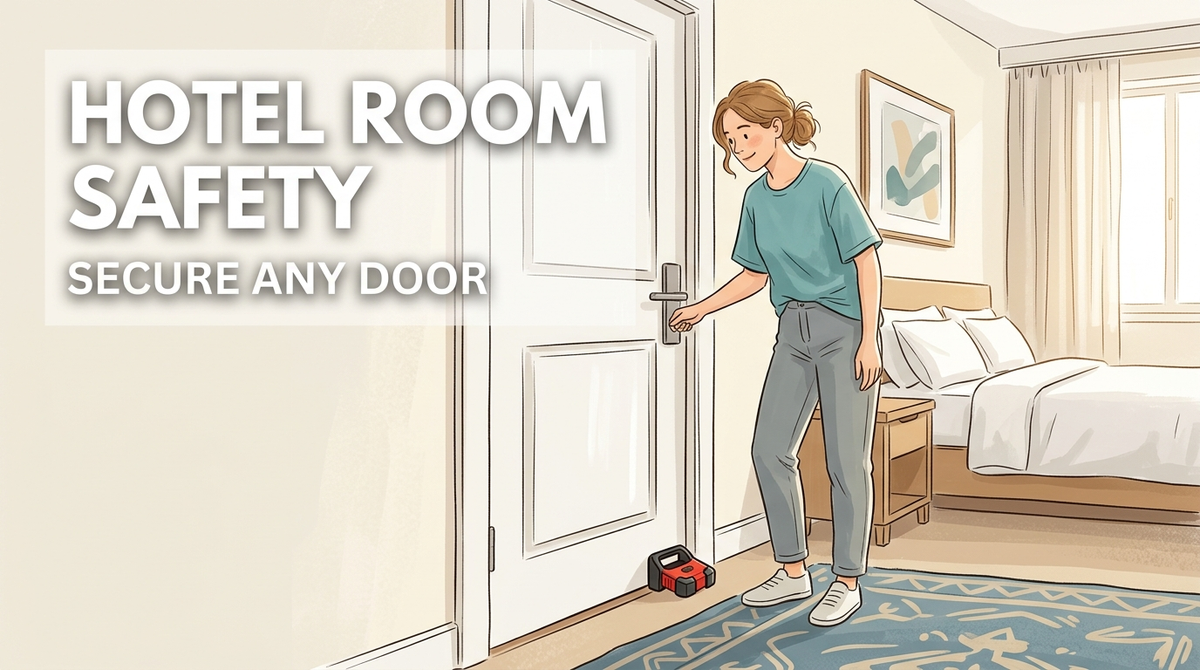
A portable door lock is any small, travel-friendly device you bring with you to add security to a hotel or rental room door — from add-on latches that clamp onto the existing lock, to solid wedges that brace the door shut, to alarms that alert you if the handle moves. They pack down small, need no tools, and give you an extra layer of control over a door whose lock you didn't choose and can't fully trust.
This guide explains the different types of portable door security, how each one works, and how to secure any room in seconds. Whether you're a solo traveller, staying in an unfamiliar Airbnb, or just someone who sleeps better knowing the door is properly secured, there's a simple device here that does the job — no drama, just peace of mind.

Why Bring Your Own Door Security?
Hotel and rental doors usually have a lock, and often a chain or latch — so why add your own? Because you have no idea who else has a key or code. Cleaning staff, previous guests who never returned a key card, maintenance, the property owner, and booking-platform contacts can all potentially access a room. Most of the time that's completely benign, but a portable device puts the final say back in your hands: while you're inside, no one gets in without you knowing.
It matters most in a few situations: solo travellers who want reassurance in an unfamiliar place, anyone staying in short-term rentals where key-handling is less controlled than a hotel, ground-floor or easily accessed rooms, and destinations where you simply want an extra margin of comfort. It's not about living in fear — it's about removing one small worry so you can actually relax. This sits alongside the broader habits in our travel safety tips guide.

The Types of Portable Door Security
"Portable door lock" is the term people search for, but it actually covers a few different devices that work in different ways. Here's an honest look at each, so you can pick what suits you.
Door wedges and stoppers
A door wedge is the simplest and most robust option: a solid brace that sits at the base of an inward-opening door, so the door physically can't be pushed open against it. The better ones are made of solid metal rather than rubber, so they stand up to real force. There's nothing to fit to the lock and nothing to break — you just place it and it works. Because it braces against the floor, it doesn't rely on the room's existing hardware at all, which is what makes it so dependable. The Travel Safety Door Stopper is exactly this: a durable solid-metal wedge that fits inward-opening doors, installs in seconds with no tools, and disassembles to pack flat in your bag. For most travellers, it's the easiest and most reliable way to secure a room.
Add-on locks and latches
These clamp onto the existing door hardware or slot into the strike plate to add a second barrier alongside the room's own lock. They can be effective, but with a catch: they only fit certain door and frame types, and they don't work on every door you'll encounter — inward vs outward opening, frame depth, and lock style all affect whether one will fit. If you travel to the same kind of accommodation repeatedly, an add-on latch can suit; if you want one device that works almost anywhere, a wedge is less fussy.
Door and handle alarms
These are small battery devices that hang on the handle or sit against the door and sound a loud alarm if the door is opened or moved. They don't physically stop entry, but they alert you instantly and the noise itself deters an intruder. They're lightweight and cheap, and they pair well with a physical device — the wedge stops the door, the alarm wakes you. Many travellers carry both.

How to Secure Your Room in Seconds
Whichever device you use, a quick routine when you enter a room covers the basics:
Use the room's own locks first. Engage the deadbolt and any chain or swing bar — they're your first layer, so always use them.
Add your portable device. Place a wedge firmly at the base of the door, fit your latch, or hang your alarm — this is the layer that's entirely under your control.
Do it whenever you're inside. Secure the door at night and any time you're in the room, not just when you sleep.
Check the rest of the room. Make sure windows and any connecting doors are locked too, especially on ground floors.
Know your exit. Keep your device easy to remove from the inside so you can leave quickly in a genuine emergency like a fire.
Which One Should You Choose?
For most travellers, a solid door wedge is the best single choice: it's the most reliable, fits almost any inward-opening door, needs no fitting, and can't fail mechanically. If you want belt-and-braces security, add a door alarm so you're alerted as well as barricaded. Add-on latches are worth considering if you consistently stay in accommodation you know they'll fit. Whatever you choose, the best device is the one you'll actually carry and use — so compact, simple, and reliable wins over complicated every time.
A door device also complements the rest of your travel security. Keeping your valuables in an anti-theft setup while you're out and securing your room while you're in covers both halves of staying safe on a trip.
Frequently Asked Questions
What is a portable door lock?
A portable door lock is a small, travel-friendly device you bring to add security to a hotel or rental room door. The term covers several types: add-on latches that clamp to the existing lock, solid wedges that brace an inward-opening door shut, and alarms that sound if the door is opened. They're compact, need no tools, and give you control over a door whose lock you didn't choose.
Do portable door locks really work?
Yes, within their limits. A solid metal door wedge is very effective at stopping an inward-opening door being pushed open, because it braces against the floor rather than relying on the room's hardware. Add-on latches work when they fit the door type, and alarms alert you rather than physically blocking entry. For reliability across the widest range of doors, a wedge is the strongest simple option.
Are door wedges better than add-on locks for travel?
For most travellers, yes. A solid door wedge fits almost any inward-opening door, needs no fitting to the lock, and has nothing to break — while add-on latches only fit certain door and frame types. If you want one device that works nearly everywhere, a wedge is the more versatile choice; add-on latches suit travellers who stay in consistent accommodation.
Is a portable door lock worth it for solo travellers?
Many solo travellers find it one of the most reassuring things they pack. It gives you the final say over who enters your room while you're inside, which is especially valuable in unfamiliar accommodation or short-term rentals where you can't be sure who holds a key. It's a small, light item that removes a real source of worry.
Will a door wedge work on any hotel door?
A door wedge works on inward-opening doors, which covers most hotel and rental rooms. It won't work on outward-opening doors, which are less common for rooms but do exist. Because it braces against the floor, it doesn't depend on the room's lock or frame, so it fits a very wide range of doors — just check your door opens inward.
Sleep Easy Wherever You Stay
You can't choose the lock on a hotel or rental door, but you can add your own layer of security — and it takes seconds. A solid door wedge is the simplest, most reliable way to make sure that while you're inside, the door stays shut on your terms. Pair it with the room's own locks, and you turn an unfamiliar room into somewhere you can genuinely relax.
Ready to secure your stay? The Travel Safety Door Stopper is a durable solid-metal wedge that secures almost any inward-opening door in seconds and packs flat in your bag — backed by our 2-year warranty, 30-day money-back guarantee, and free shipping, from a proudly Aussie-owned team trusted by over 300,000 travellers. It's a small thing to pack for a much better night's sleep away from home.

Leave a comment
This site is protected by hCaptcha and the hCaptcha Privacy Policy and Terms of Service apply.